


Residential -
Get your summer escape holiday-ready
With summer now upon us and those long-awaited bach getaways in sight, now’s the perfect time to give your coastal or country retreat a little TLC. A pre-holiday once-over can save you surprises later, from sticky doors and dodgy decks to spiders setting up camp in all the wrong places.
Whether your bach is a classic Kiwi gem that’s been in the family for generations or a newer escape you’re still getting to know, a bit of smart prep now will keep it comfortable, safe, and ready for easy summer living the moment you roll up the drive.
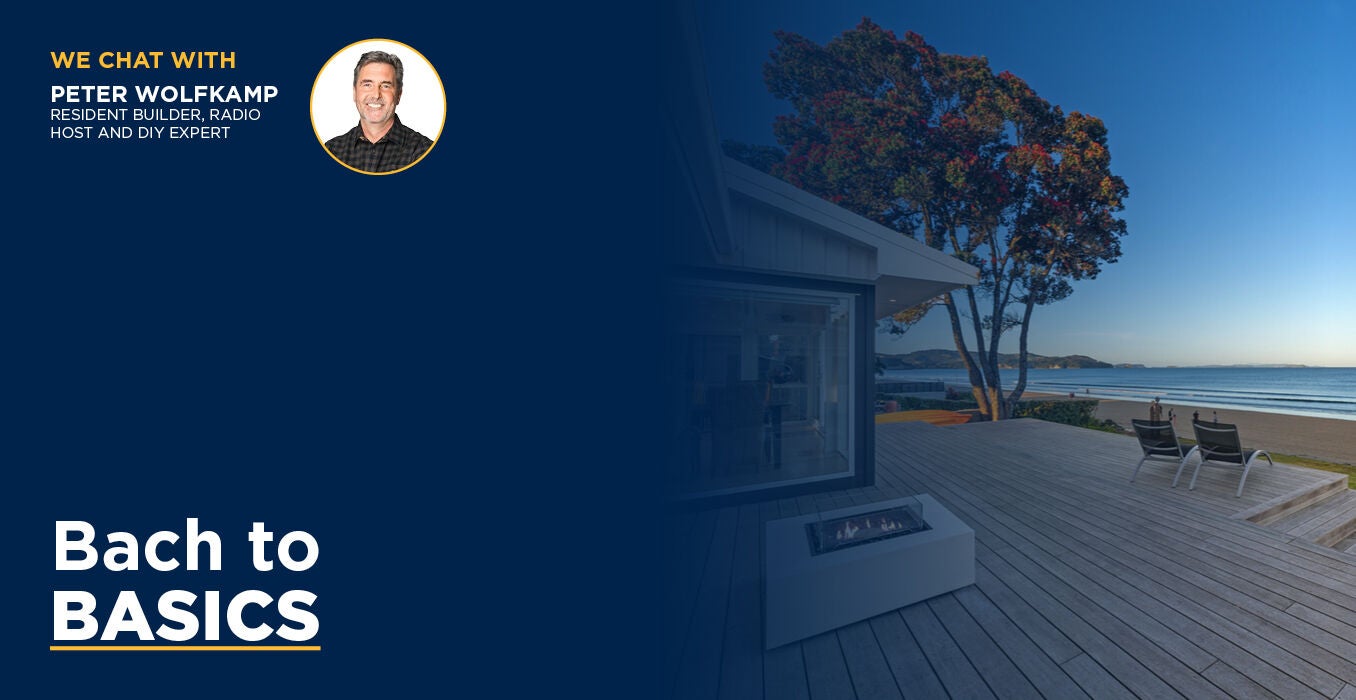
Resident builder, radio host and DIY expert Peter Wolfkamp says just like your regular home, you can’t deny the maintenance on your bach.
“In some cases, because they’re located in areas that are perhaps more exposed to the elements than in an urban environment, the maintenance requirements might actually be higher too.”
“As a bach owner, you really need to think about the fact that you're on top of a hill, or you're close to the beach, or you're in the bush where it's more shaded and so you're not getting as much sun.”
He says with all that information, it’s important to be realistic about what the requirements may be too.
“One of the greatest frustrations we all have is thinking it will take less time than it actually does.”
“The other thing with maintenance that I think is really important is to have a plan.”
That means doing damage assessments yourself or getting an expert in to do it for you before a mole hill becomes a mountain.
“You should be looking at the property over the next couple of years and asking what you may need to do with it to keep it in good knick. I’d also suggest keeping a reserve fund handy that equates to 1% of your total house value - almost like your own body corporate.”
“That means that you’ve got some funds available if summer’s coming and the bach roof didn’t last as long as you expected."
WHY YOU SHOULDN’T DELAY
Wolfkamp says the number one rule about maintenance is not to delay.
“Because any maintenance delayed makes for a much bigger job down the track.”
“A prime example of this is a client of mine who delayed fixing the hinges on a second-storey window in his home. One day, the window was open, the wind caught it, and it swung back, broke and fell to the ground.”
What could have been a 15-minute job became much more involved.
“I had to measure up the window, get a joiner to then make it. I had to go to a glazier to get new glass for it, replace the hinges and then put up scaffolding to put the window in.”
“That was a classic example of if something needs to be done, it’s important to do it right away. So, if your downpipe or the spouting is blocked, or you're lying in bed at night and you can hear a banging on the roof, remember that it’s not going to fix itself.”
WHAT SHOULD YOU FOCUS ON?
Wolfkamp says it starts with the phrase “good hat and good feet.”
“I'd pay particular attention to the roof, especially if you're in a wooded area where you’re going to get leaves and debris in the spouting.”
Ventilation is another big one that’s great to focus on as a way to prevent faster wear and tear.
“That building on its own is going to get very cold, and then it may get very hot, but it won't have any airflow through it if it’s unoccupied for a long period of time.”
“There's some incredibly sophisticated, well thought out and in some cases quite simple ventilation systems that you could add in that allow for a little bit of airflow through the building over that period of time when you're not going to be there.”
Wolfkamp says they’re relatively easy to retrofit and can have a huge impact on the health of your bach.
“Ones that I've been looking at are two fans on either side of the building that are fixed through the walls, and they talk to each other by reading the humidity and wind and either draw in or push out air.”
“That means there’ll be less moisture and less opportunity for mould growth.”
Keeping an eye on weather patterns and where water travels on your property is also important.
“When there’s incredibly heavy downpours, it pays to figure out what goes on around your property, and what can be done to protect it.”
“Is there an overflow path? Is there a way to direct water around the building, rather than it hitting the building and damming up against it?”
Wolfkamp says being aware of your environment and making strategic plans around it will save you hassle down the track.
“Keeping on top of the building’s protective shell is also really important, so making sure that painting is done regularly.”
Then there’s the added extras that often only come with a bach, like the water tank.
“You want to maintain your spouting, your downpipe and have some filtration system on it so that you're not dragging leaves into your tank.”
“I certainly know of a few mates that have turned up at their bach only to discover that there's a leak in the water tank because of a lack of maintenance.”
ANY SPECIAL CONSIDERATIONS FOR COASTAL PROPERTIES?
Wolfkamp says it’s important not to underestimate the reach of windblown salts from nearby beaches.
“A recent study on the Chatham Islands found that where it's extreme, things decay five times faster simply because of the exposure.”
“Now if you're close to the water’s edge, and particularly if you can see the water, then you know you're going to get windblown salts, and the corrosive element of that is during weather events when salt gets carried along by the moisture and the rain is deposited on your house causing things to rust.”
Wolfkamp says the simple fix is a regular house wash.
“If you do a good job with your painting, it'll probably last somewhere between five to seven years, but if you do a house wash once a year, you’ll probably get closer to eight to 10 years out of it.”
“There’s plenty of options for this. You can either hire someone to do it for you, or do it yourself with a long broom, or there’s really simple treatments that you can buy which clip to the end of the hose and you just spray it onto the house.”
WHAT ABOUT MY OUTDOOR FURNITURE?
While it’s not part of the house, your outdoor furniture is an extension of it, and something that also needs a bit of TLC.
“I do think that we underestimate the impact of UV exposure. Prolonged exposure can do some serious damage, and outdoor furniture is no exception whether it’s plastic or timber.”
“So if the bach is out of action at the very least you should be covering and storing that furniture away.”
To preserve timber items during the long summer months, Wolfkamp says they also need maintenance.
“The key thing is understanding what product was used originally on the timber and making sure that what you apply is compatible with it.”
“There are penetrating oils, and then there are film forming stains or sealers. You can't put an oil onto something that's had a sealer on it, and if you try to apply a sealer to something that's had an oil on it, it'll just sit on the surface.”
He says the same applies to all decks as well.
“I’d recommend making sure that for your maintenance, you continue to use the same type of product right through its lifespan, as you can't mix and match these things.”
WHEN SHOULD I START?
With the point of a holiday home mostly being about enjoying it during the summer, Wolfkamp says it’s a great idea to look at doing some work on it before the height of the holiday season.
“Pick a weekend before that period and get it all done. Then it's just a gentle maintenance over the summer, rather than arriving and having to dedicate some time during every single visit to the bach.”
Wolfkamp also recommends thinking about the potential maintenance before doing any upgrades too.
“So, you're thinking about what it's going to take to look after the property and those upgrades in the future.”
“Landscaping is a big one. So think about ensuring that planting isn’t too close to the house, that you've got a bit of separation as protection during any stormy weather.”
A little time spent on bach maintenance now means you can switch into summer mode the moment you walk through the door. With the essentials handled and the hard work behind you, the only thing left to worry about is who’s bringing the pavlova and whether there’s enough sunscreen to go around.
Contact us


